
What sit-stand desks really cost, what to look for in a frame, and when a fixed-height desk still makes sense.
On this page
Sit-stand desks have gone from a perk to a standard request. They are a real improvement for many people – but not every desk on the market is built for eight hours a day, five days a week.
What you are really paying for
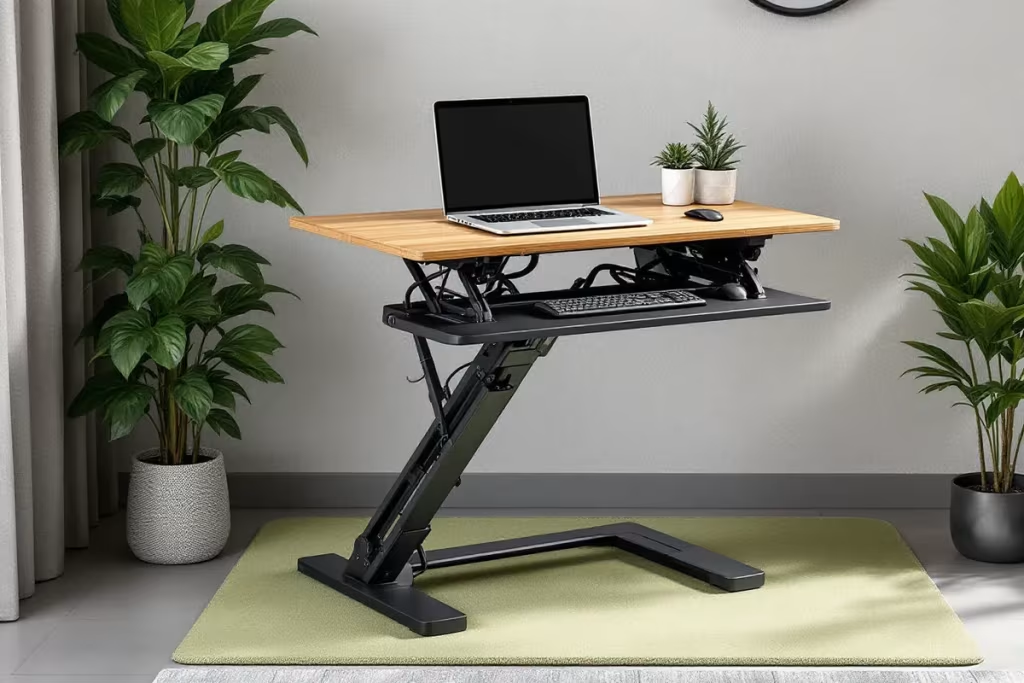
The top is the easy part. The frame is where quality shows: motor count, lifting capacity, speed, noise and how steady the desk feels at standing height. A wobbly desk at full height is one that stops getting raised.
Features worth having
- Dual motors for heavier setups with multiple monitors
- Memory presets so each user returns to their heights with one press
- Anti-collision stop that halts the desk if it meets a chair or cabinet
- A height range that fits your shortest and tallest people
Cable management is not optional
Every cable has to travel the full height of the desk. Without a tray and a proper cable spine, cords get pulled out of the wall or snagged under the frame. We install, level and cable-manage every sit-stand desk we deliver.
When fixed height still makes sense
Shared hot desks, training rooms and short-stay touchdown spots rarely need motors. Spending there can move budget to the desks people use all day.